

Contents
An Intriguing Prospect: Chinese Automakers in the US
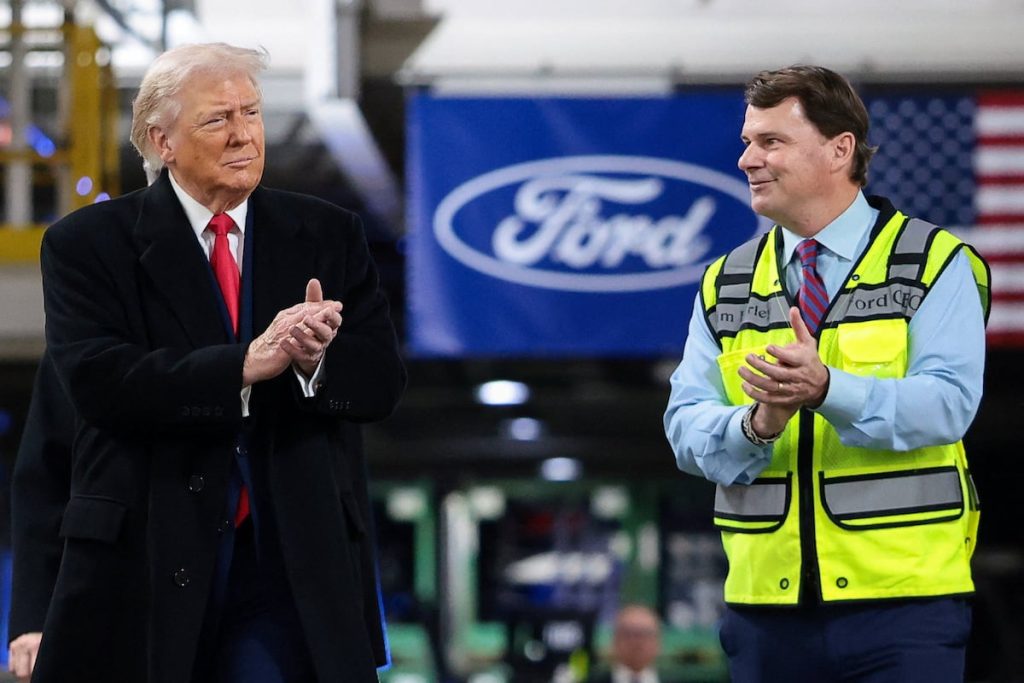
There’s quite a buzz surrounding the discussions between Ford’s CEO, Jim Farley, and the Trump administration. The gist of it is to possibly formulate a plan allowing Chinese automakers entry into the US market. This proposal would require them to set up manufacturing locally while safeguarding domestic manufacturers. How very intriguing, don’t you think?
Mirroring Historical Arrangements
This arrangement reminds one of the strategy China employed three decades ago. Back then, Western manufacturers had to collaborate with Chinese firms to establish their factories. Volkswagen, for instance, teamed up with SAIC Motor, the proud owner of the MG brand, to sell in China. MG has since thrived in Europe, especially Spain, where its ZS model became the eighth top-seller in January.
Expansion of Chinese Influence
Chinese automakers are already nearing US shores. Canada’s recent approval for certain Chinese electric vehicles exemplifies this, along with the increasing visibility of BYD vehicles — a leading player in plug-in hybrids — in Mexico.
Discussions and Caution
Farley discussed the venture in January with US Trade Representative Jamieson Greer and other officials during the Detroit Auto Show. A few days prior, President Trump expressed openness to the idea if Chinese brands manufactured and employed locally. However, this concept is still informal and preliminary.
Ford is keen on safeguarding local markets from a deluge of subsidised Chinese vehicles. Mark Truby, Ford’s communications chief, has emphasised this concern. Privacy and national security issues linked to Chinese vehicles were also highlighted by Truby, a point that Ford continues to stress to policymakers.
A Highly Protected Market
Allowing Chinese automakers in would cause ripples throughout domestic industries, especially for carmakers, their supply chains, and, of course, consumers. Chinese carmakers are gaining traction in Europe and South America, offering affordable models with advanced tech.
General Motors stands opposed to these plans, worried about market share loss and an adverse effect on North American suppliers. This sentiment resonates with Trump’s cabinet, sharing concerns over economic and national security.
Chinese Technology: An Existential Threat?
Farley has often warned about the threat posed by inexpensive, high-tech Chinese vehicles. He famously dubbed it an “existential threat”. “Their vehicles’ cost and quality surpass Western counterparts,” he noted last summer. Farley’s remarks came during the Aspen Ideas Festival, following multiple visits to China over the past year.
Future Collaborations
Ford seeks partnerships with Chinese carmakers to glean insights while developing its own cost-effective EV, aimed at contending with BYD by 2027. However, the electric division remains unprofitable, necessitating a reduction in EV investments — a decision impacting Ford’s financials by $19.5 billion in 2025.
Ventures and Developments
Recent talks with BYD considered battery supply collaborations, while potential partnerships with Geely involved underutilised European plants, like Almussafes in Valencia. Ford plans for two affordable electric models for Europe to be manufactured by Renault, hitting the market by 2028.
Furthermore, licencing with battery giant CATL has expanded. Rumours about a joint venture with Xiaomi in the US were firmly denied by Ford and Xiaomi.
For those interested in keeping up with such developments, do check out our weekly newsletter for more from EL PAÍS USA Edition.
This ongoing narrative is rather gripping, isn’t it? The entwining fates of global automobile giants and geopolitical manoeuvres are nothing short of fascinating.
