

markdown
Contents
- 1. The Enigmatic Wealth of Ayatollah Ali Khamenei
- 2. A Modest Facade, A Hidden Empire
- 3. The Intricate Web of Setad
- 4. Wealth and Political Influence
- 5. Charitable Veneer and Social Control
- 6. Parallel to Russian Systems
- 7. Political Repression as Fuel
- 8. The Shadowy Side of Sanctions
- 9. Succession and the Future
The Enigmatic Wealth of Ayatollah Ali Khamenei
It’s a rather curious affair, this perception of Iran’s Supreme Leader, Ayatollah Ali Khamenei. While he is certainly no stranger to controversy, he isn’t known for splendour or luxury.
A Modest Facade, A Hidden Empire
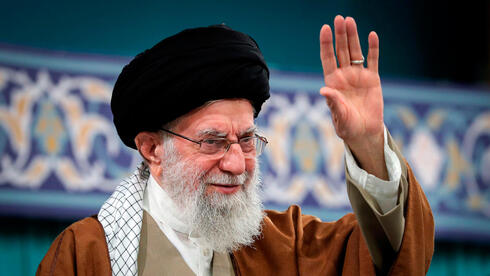
Khamenei’s daily image is one of austerity. He dons traditional robes, avoids private jets, and reportedly owns no more than $50,000 in personal assets. Yet, behind this modest facade lies a sprawling empire. This economic behemoth, comparable to that of Vladimir Putin’s shadowy wealth, remains outside Iran’s elected institutions’ reach.
The Intricate Web of Setad
Central to this tale is Setad, or EIKO (Execution of Imam Khomeini’s Order). It runs like a veritable octopus, influencing nearly every economic sector. This body’s impressive reach helps maintain the resilience of Iran’s political structure amidst ongoing economic woes.
Origins and Expansion
Setad originated during the chaos following the 1979 revolution, managing abandoned assets. Under Khamenei, its power expanded enormously. Estimates by Reuters in 2013 pegged its worth at a staggering $95 billion. Current projections suggest it could be upwards of $200 billion.
Wealth and Political Influence
Setad operates as a vast conglomerate, not merely a personal fortune. It wields influence over industries ranging from telecommunications to banking. The organisation’s financial tentacles extend deeply into Iran’s economy, providing livelihoods and status to many, effectively binding them to the regime.
Charitable Veneer and Social Control
Setad doesn’t just thrive in the business sector. It also operates numerous charitable foundations. These charitable endeavours, some like the Barakat Foundation, cushion Iran’s poorer populations by providing essentials such as education, medicine, and even COVID-era vaccines.
Parallel to Russian Systems
Khamenei’s economic network mimics structures seen in Russia, where oligarchs exert significant influence. In Iran, this network is more expansive, encapsulating thousands, creating a powerful loyalty to the government through economic dependency.
Political Repression as Fuel
The regime has often targeted religious minorities, confiscating properties which are then repurposed to bolster Setad’s holdings. These acts of repression have fueled Setad’s growth, ensuring a steady inflow of assets, many transferred under the guise of privatization.
Holding Every Stake
Setad acquires significant shares in targeted companies. It controls sectors ranging from oil to agriculture, securing dominance over major infrastructural projects and government tenders.
The Shadowy Side of Sanctions
For a time, Setad faced Western sanctions. These were relaxed post-2015, allowing the organization to operate more freely, hidden from prying eyes even within Iran’s government.
Succession and the Future
As Iran considers its future leadership, the shadow of Khamenei’s empire looms large. His son, Mojtaba Khamenei, is a name mentioned often. Different from his father, Mojtaba reflects a newer, more privileged generation of Iranian elites.
A Question of Continuity
Whether Mojtaba will lead from the same austere front or embrace a more opulent lifestyle remains to be seen. But one thing is clear: any shift in leadership will need to reckon with the intricacies of Setad and its power over Iran’s economy.
While Ayatollah Khamenei’s day-to-day remains ostensibly modest, the vastness of Setad paints a very different picture indeed, one that is crucial to understanding the intricate tapestry of Iran’s political and economic structure.
