

markdown
Contents
- 1 The Global Economic Whirlwind
- 1.1 Questioning American Precepts
- 1.2 Predicting the Unpredictable
- 1.3 International Repercussions
- 1.4 Global Defensive Strategies
- 1.5 Navigating Uncertainty
- 1.6 A Pause on Exceptionalism
- 1.7 Global Economic Order Unsettled
- 1.8 Governments on Edge
- 1.9 The Federal Reserve’s Role
- 1.10 Contrasting Forecasts
- 1.11 Preparing for Impact
- 1.12 Developing Resilience
- 1.13 Economic Revival
- 1.14 Bold Pathways
The Global Economic Whirlwind
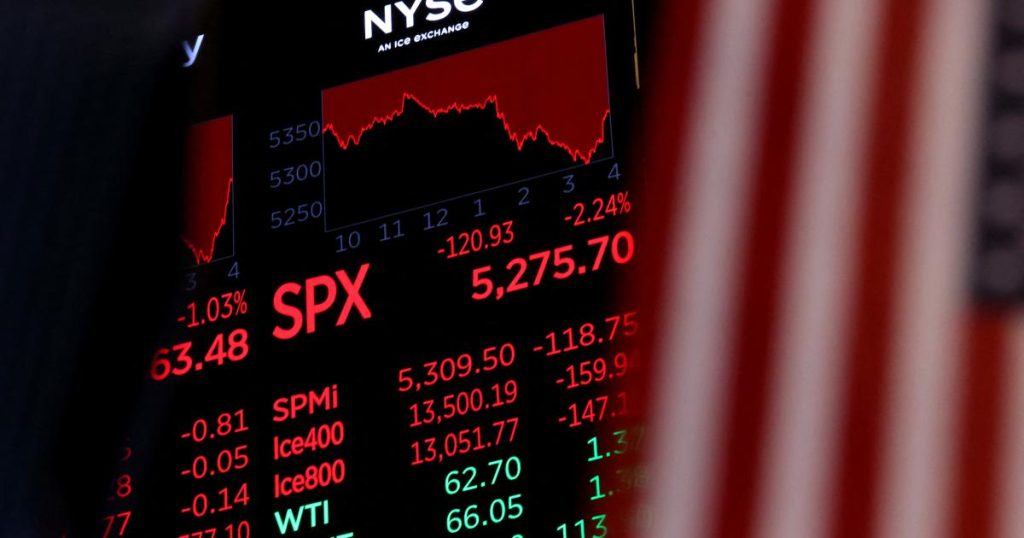
The global economy, as gentlefolk would say, is indeed in quite a state of flux. Preceding the recent U.S. elections, it was already dealing with geopolitical shocks and the promise of transformative technological innovations. Yet now, it faces a bewildering amount of policy volatility emanating from the world’s most powerful nation. The result? A veritable roller coaster, not only for bonds and equities but also for economic forecasters and policymakers.
Questioning American Precepts
This turmoil has thrown into question long-held narratives about the United States. The assumptions that households, companies, and investors once relied upon have evaporated. Confidence metrics have plummeted, and inflation expectations have surged to peaks last seen during 1981.
Predicting the Unpredictable
Despite this deep uncertainty, forecasters wrestle with predictions for the United States’ economic fate. Two scenarios emerge: one where the country experiences a restructuring akin to the Reagan-Thatcher era with less debt and a more efficient private sector, and another where it slips into stagflation, reminiscent of Jimmy Carter’s presidency, potentially plunging into a significant recession.
International Repercussions
Irrespective of the outcome, the repercussions will be felt worldwide. Since the end of World War II, the U.S. has been at the centre of global markets, its financial systems influential in multilateral institutions. The U.S. economy, known for spearheading productivity-enhancing innovations, has long been the world’s economic engine. A stagflated U.S. economy would imperil other nations, potentially dragging them into a similar fate.
Global Defensive Strategies
Other nations are not idle. They attempt to insulate themselves from Washington’s volatilities. Europe is forging stronger economic ties with Africa, Asia, and Latin America, while China positions itself as a more stable superpower. However, such efforts face significant challenges, with no other nation ready to fill America’s shoes.
Navigating Uncertainty
Governments, companies, and investors must brace themselves. Agility and flexibility are crucial, along with resilience in capital and human resources. Embracing new ways of thinking will enable them to withstand the tumult and perhaps thrive post-volatility. However, a paralysed stance jeopardises the welfare of both present and future generations.
A Pause on Exceptionalism
America, the powerhouse, now at times mirrors a developing nation. Tariffs have been erected, and deficits swell, resembling certain Latin American economies. Should this behaviour persist, the risk of capital outflows and investor hesitance grows. Precious markets and the mighty dollar could falter, diminishing their historic dominance.
Global Economic Order Unsettled
As President Trump makes good on promises to disrupt economic norms, the question lies in the extent of change. Washington’s moves have rocked foundational certainties, leaving the world on tenterhooks. The quest for a reliable conductor to navigate the transition remains unanswered.
Governments on Edge
Uncertainties burden governments, with potential shifts in trade upending capital flows. The U.S. Federal Reserve faces challenges balancing price control and avoiding economic contraction. Meanwhile, tensions between Trump and Jerome Powell exacerbate these concerns, threatening the Fed’s independence.
The Federal Reserve’s Role
For a brighter economic scenario to unfold, the Federal Reserve must manage interest rates adeptly. Increased productivity and reduced fiscal pressures could allow for significant rate cuts. Reconciling differences between Trump and Powell is essential to this outcome.
Contrasting Forecasts
Economic forecasters are divided. Optimists foresee a streamlined government unencumbered by debt, unveiling a vibrant private sector. This scenario likens to a global and domestic reset. Yet, a more pessimistic view anticipates persistent deficits and degrading trust in institutions.
Preparing for Impact
While few entities can fully shield against volatility, strategic navigation is possible. Maintaining course may prove prudent if global dynamics remain somewhat familiar. Yet, many may opt for a cautious approach in light of inherent uncertainties.
Developing Resilience
Resilience is key. Financial, human, and operational strength must be bolstered. Companies should hold more cash, diversify supply chains, and enhance communication. Policymakers must adeptly stress-test strategies, avoiding cognitive biases that hinder adaptation.
Economic Revival
Faced with considerable uncertainty, decision-makers must be vigilant yet bold. The choices ahead carry significant implications for global prosperity. Innovation and reinvention could lead to not just weathering the storm but emerging robustly renewed. Bold foresight is the need of the hour.
Bold Pathways
The looming chaos invites nations to rethink economic management fundamentally. If leaders can harness upcoming innovations, the world may transcend its current challenges, emerging into an era of greater strength and prosperity.
For further insights, see multilateral institutions, artificial intelligence, and global markets.
