

Contents
Concerns Over Stagflation in the American Economy
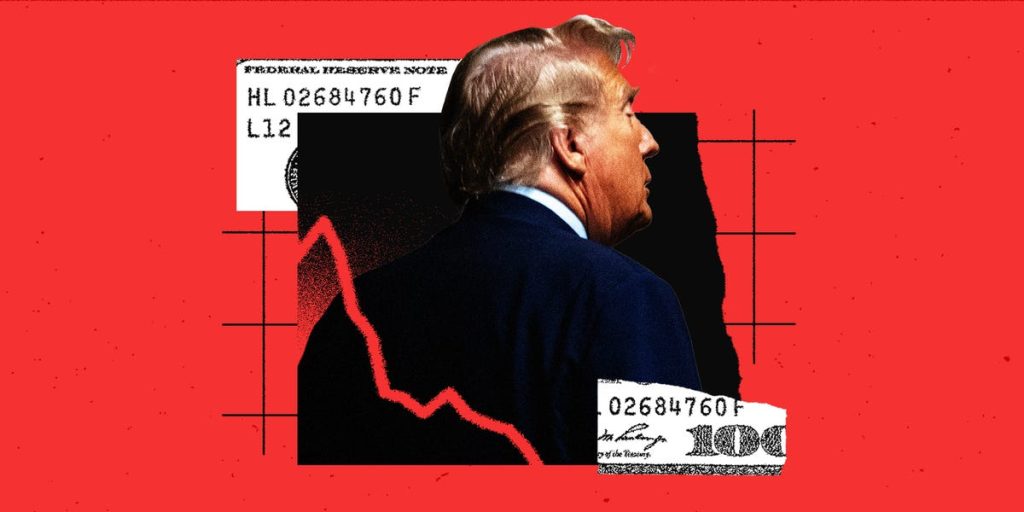
The spectre of stagflation, a dreaded economic phenomenon where inflation soars as growth declines and unemployment spikes, haunts the American economy, reminiscent of the trying times of the 1970s. This era was indeed a lost decade for the U.S. stock market.
Stagflation Worries Might Be Overstated
Fears of stagflation looming over the U.S. are exacerbated by recent economic signals. However, Sonu Varghese, a global macro strategist at Carson Group, firmly believes such fears are exaggerated. He argues, "Folks, we are far from stagflation."
For additional context, consumer sentiment has noticeably waned since President Donald Trump’s inauguration. Concerns about tariffs potentially causing an inflation spurt partly fuel this sentiment. But Varghese points out that these heightened inflation expectations might just reflect general political dissatisfaction instead of true financial conditions.
Inflation Expectations and Federal Reserve Watch
Now, it’s worth mentioning that a rise in inflation expectations would typically catch the attention of the Federal Reserve. However, Varghese notes that other surveys, such as the New York Federal Reserve’s consumer survey and the Atlanta Fed’s business expectations survey, don’t show a similar pattern. Importantly, wage growth—a driving force behind inflation—is currently aligning with pre-pandemic trends consistent with low inflation levels. In fact, the reports indicate a 3.6% annualised wage increase for private workers over the past three months, a slight rise from the pre-pandemic 3.1%.
Energy Market Stability: What’s Up with Oil?
In reflecting on the past, one remembers the surging oil prices during the 1970s stagflation episode. Yet today, there’s no equivalent energy shock. Varghese points out that "energy price shocks tend to drive upside inflation shocks and right now, we don’t have anything close to that." Currently, U.S. crude oil stands at a modest price, just under $70 per barrel, a figure last seen in 2018.
Supporting this, with US oil production near record levels and OPEC relaxing its production cuts, there’s little chance that oil prices will spike anytime soon.
The Labour Market: A Pillar of Strength
Turning our lens to employment, despite a slowdown in hiring, the labour market remains solid. The current unemployment rate holds steady at 4.1%, historically low by most standards. Additionally, "overall layoffs are running lower than where they were before the pandemic," according to Varghese.
Concluding Thoughts
While speculations of future labour market weaknesses, partly influenced by cultural phenomena like DOGE, circulate, there are no immediate signs of stagflation, Varghese reassures. As economic analysts continuously scrutinise various indicators, it’s essential to assess the bigger picture with a level head.
In sum, while the semblance of stagflation casts a shadow, immediate data suggests a more optimistic reality for the time being. As the discourse evolves, keeping apprised of developments will be vital for all stakeholders involved.
