

markdown
Contents
A Sweet Legacy: Spreckels Sugar and Manteca
The Beginnings of Success
Ah, Manteca and Spreckels Sugar—a relationship forged by history and necessity. World War I gave rise to a sugar shortage which, inadvertently, laid the foundation for Spreckels Sugar’s fruitful years. This venture truly defined Manteca’s prosperity for nearly eight decades. As travellers sped along Highway 99 and the 120 Bypass, they would catch a whiff of the processing plant, marking their passage through Manteca.
The Sweet Land Deal
It all commenced with what one might call a “sweet land deal.” Spreckels Sugar dispatched scouts from their Salinas operations in search of ideal locations for a second factory. They aimed to meet the surging demand precipitated by the Great War. The criteria—suitable soil and climate for sugar beets, alongside an efficient irrigation system—led them to cast eyes upon Manteca. The presence of the South San Joaquin Irrigation District made Manteca an enticing prospect.
Manteca’s Bid for the Plant
Initially, Spreckels seemed inclined towards Mossdale near Lathrop or even Stockton, given their access to rail and water. However, cunningly, Manteca offered Spreckels 449 acres just southeast of town at a bargain. Thus, the $2 million plant was inaugurated in 1918, with 400 men on the payroll and a staggering $40,000 in wages paid out by season’s end.
From Sugar to Business Park
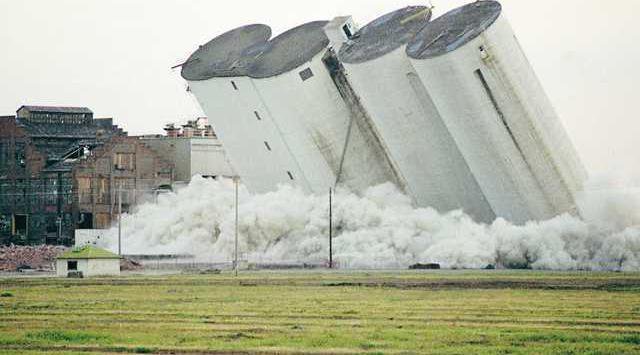
The plant’s impact on Manteca was profound. Claus Spreckels began construction the same year the city incorporated. Its four 15-story silos were iconic, signalling economic strength. The aroma of sugar processing, mixed with the scent of cattle from the nearby Moffat Feed Lot, was unmistakable. Eventually, the 362-acre Spreckels Business Park arose, with establishments like Frito-Lay, Ford Motor Co., and others marking their presence.
Contribution to War Efforts
During World War II, reduced acreage mandated a temporary closure. Nevertheless, the plant converted to war production for the Navy. It reopened in 1946, returning to full production by 1948. To showcase its economic contributions, Spreckels once paid employees in $2 bills, deeply embedding itself in the community’s fabric.
The Economic Tide Turns
As the 1980s unfolded, Spreckels became a key supplier of liquid sugar to giants like Coca-Cola. However, with bottlers shifting to high fructose corn syrup, the company sought new markets. Despite significant investments in pollution control, broader challenges spelled trouble. Offshore subsidised sugar and stringent air quality rules, alongside cheaper production costs elsewhere, led to the Manteca plant’s closure announcement on January 9, 1996.
Farewell to a Giant
On that fateful day, the closure cost 110 full-time and 120 seasonal employees their jobs. The once-dominant employer had slipped to fifth place. Two years later, a crowd gathered to witness the implosion of those towering silos. In just ten seconds, Manteca’s once-revered landmark collapsed, leaving behind a cloud of dust and memories.
The New Era
Yet, from those ashes, Manteca thrived anew. The original 220 job losses have been eclipsed, with the likes of Ford Motor Co., Target, and others creating opportunities. Developer Mike Atherton aptly noted the sugar company’s role in fostering Manteca’s growth both in its early years and now, as the community continues to flourish.
For further inquiries, contact Dennis Wyatt at email.
