

markdown
Contents
The Interest Rate Dilemma
While some may argue that the U.S. Federal Reserve should consider lowering interest rates, the rationale for such a move remains tenuous. Indeed, despite governmental challenges to business investments, the economy persists with resilience. Analysts suggest that interest rates are not excessively high given current conditions.
Employment and Economic Indicators
The stability in employment rates among those aged 25 to 54 reinforces this narrative. The share of employed adults in this age group has held a multi-decade high since 2022’s end. Although one might notice slight deviations if examined closely, these remain generally inconsequential.
Underemployment Trends
Underemployment figures, while slightly less optimistic than early 2023, remain relatively favourable. Most of the minor downturns in these figures occurred over a year ago, showing scant alteration in the past 12 months.
Inflation Concerns
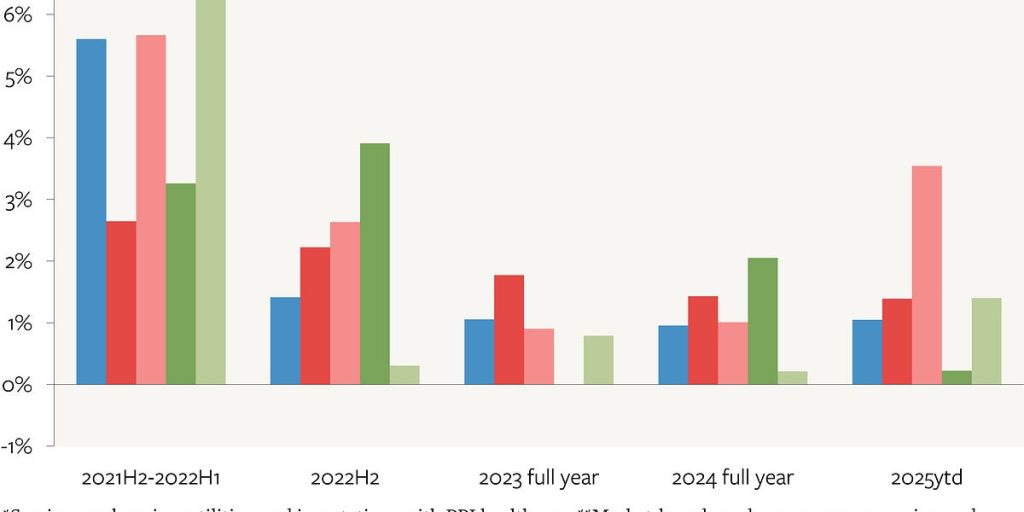
Inflation continues to trend faster than desired, presenting more substantial upside risks than downside. This situation poses a larger problem for monetary policy adjustments. With inflation not aligning with targets, reducing interest rates could be premature.
The State of Business Sentiment
Interestingly, recent indicators of business sentiment have improved compared to the earlier months of March and April. This rebound suggests that the economy may have, at least temporarily, hit a cyclical low. Such positivity could dampen any urgency to alter current monetary policies.
Conclusions
In conclusion, while some pressure exists to adjust the policy interest rate band, the arguments for maintaining the status quo are stronger. Economic conditions, employment rates, and inflation trends imply that immediate rate reductions may not be justified. As the situation evolves, policymakers will need to weigh these factors carefully.
