

Since his return to office, President Trump has once again ruffled feathers on the global stage by introducing a string of tariffs, aiming to reconfigure the international economic landscape. In this article, we’ll take a closer look at these tariffs, exploring their rationale, potential impacts, and who ultimately bears the cost.
Contents
What Exactly are Tariffs?
An Introduction to Tariffs
Tariffs are essentially surcharges levied by a government on imported goods. These funds are collected at national borders, ostensibly to protect local industries and jobs. However, they often serve as tools for economic strategy and political leverage. Curious about the broader implications of tariffs? They can be quite multifaceted.
Who Actually Pays for Tariffs?
To understand tariffs, it’s crucial to know who foots the bill. Consider a company like Walmart, which imports goods, such as shoes from Vietnam. If those shoes face a 46% tariff, Walmart owes an additional $4.60 for every $10 shoe. There are several ways in which Walmart could respond to these extra costs:
- Shift the Burden: Walmart might try to force Vietnamese manufacturers to reduce prices.
- Absorb the Cost: They may swallow the tariff, sacrificing profit margins.
- Pass it On: Alternatively, higher costs could be passed on to the consumer by raising prices.
- A Bit of Everything: They could resort to a mix of the above strategies.
In Mr. Trump’s initial term, when he imposed tariffs on China, detailed economic studies found that consumers bore most of the costs. However, tariffs on foreign steel affected prices differently, with only about half the extra costs trickling down to customers.
Trump’s Bold New Moves
Unprecedented Tariffs
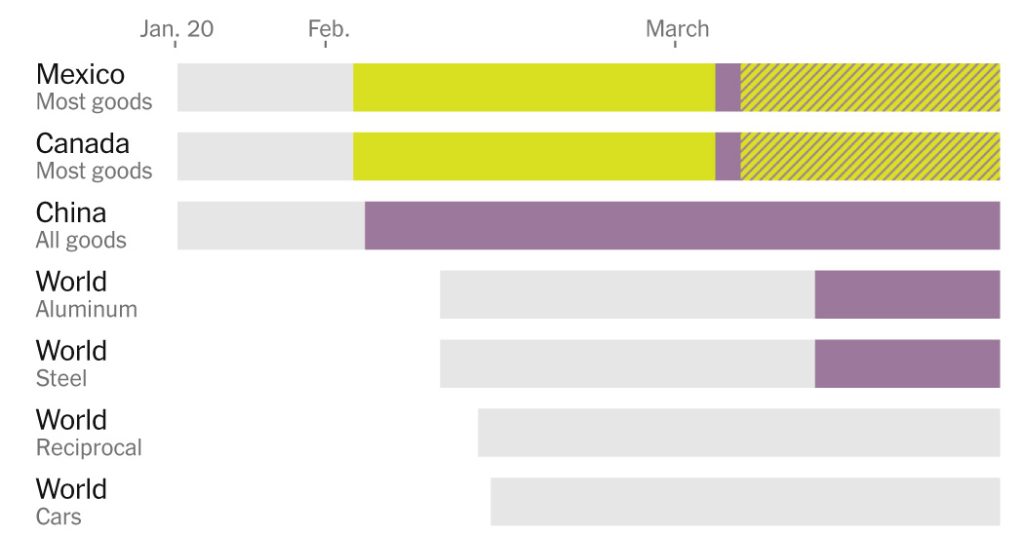
Wednesday saw Mr. Trump unveil some of his most audacious policies to date. By the weekend, a 10% base tariff was in place globally, with significantly steeper rates for numerous nations expected soon. The president’s intent seems clear: to redefine how trade operates and where economic power resides.
The Ripple Effect
These tariffs have triggered a cascade of global reactions. Financial markets have taken significant hits, while several world leaders have expressed their disapproval. There’s also growing anxiety over potential inflation and a possible slowdown in economic growth.
What Lies Ahead?
We’re in for a tumultuous ride ahead as the effects of these tariffs unravel. World economies are interconnected, and the knock-on impacts can be hard to predict. Will countries find a way to absorb these extra costs, or will the global market undergo a sea change?
While the long-term effects of Mr. Trump’s tariffs remain uncertain, one thing is clear: the recalibration of global trade is underway, with all eyes watching closely.
