

New York — CNN
Contents
A Tumultuous Day for US Stocks
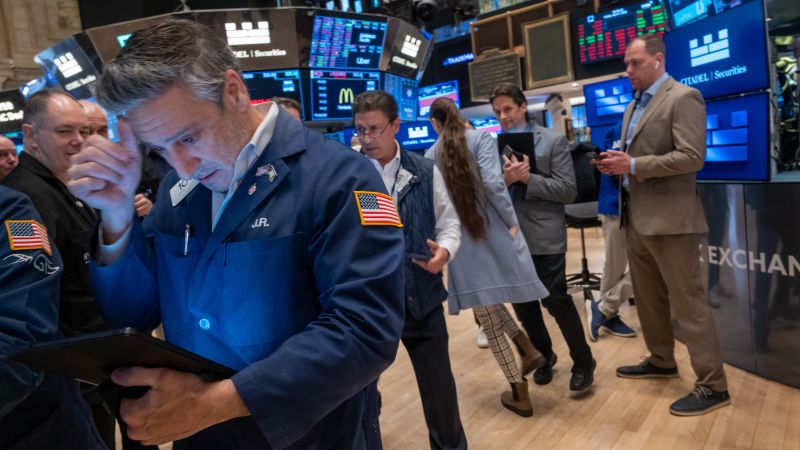
US stocks suffered a severe blow on Friday, driven by a sharp sell-off. The Dow plummeted 2,231 points, or 5.5%. In the broader spectrum, the S&P 500 fell by 5.97%, while the tech-heavy Nasdaq Composite dropped by 5.82%.
Nasdaq in Bear Territory
The Nasdaq, unfortunately, closed in a bear market status, experiencing a drop of over 20% from its December high. Equally ominous, the Dow entered a correction phase, falling over 10% from its December peak. Notably, this marked the Dow’s most significant consecutive losses since March 2020, amidst the COVID-19 outbreak. Learn more about bear markets.
China’s Retaliatory Tariffs
Friday’s stock decline followed China’s announcement of sweeping 34% tariffs on all US goods, taking effect from April 10. This move was a response to President Trump’s tit-for-tat tariff strategy, which has heightened the ongoing global trade war. In February, Trump imposed a 10% tariff on Chinese goods, which he raised to 20% in March. On Wednesday, tariffs escalated further to 54%, adding strain to the global economic climate. CNN source.
Market Reaction and Future Concerns
Investor Anxiety
Howard Silverblatt of S&P Dow Jones Indices noted that by late Friday, the S&P 500 had shed $4.88 trillion over two days. Meanwhile, JPMorgan analysts highlighted a 60% risk of recession for both US and global markets, exacerbated by countries retaliating against the US, as China illustrated on Friday.
Insights from Market Experts
Matt Burdett from Thornburg Investment Management remarked, “Markets may be underreacting considering the tariffs’ knock-on effects to global trade.” Likewise, Federal Reserve Chair Jerome Powell stated that heightened tariffs could inflate prices and slow economic growth. More financial insights from experts.
Safe Havens and Yield Movements
Investors sought refuge in traditional safe havens like government bonds and gold, with 10-year Treasury yields seeing a decline below 4%. Gold prices, initially soaring past $3,130, later stabilized around $3,030 per troy ounce.
International Reactions and Negotiations
Possible Resolutions
In a surprising twist, President Trump mentioned a “very productive call” with Vietnam’s Communist Party leader, To Lam, whereby Vietnam expressed a desire to slash tariffs to zero—as long as an agreement with the US is achievable. Yet, this brief optimism was overshadowed when markets slid back due to escalating tariff concerns.
Broader Implications
International responses varied. For instance, Canada put tariffs on American cars, while the EU preferred targeted actions instead of reciprocal tariffs. Trump’s comments to lower tariffs in exchange for, say, TikTok’s sale, displayed how intertwined economic and geopolitical strategies have become.
Uncertain Economic Path Ahead
Job Growth amidst Turbulence
Despite unsettling market conditions, March showed robust job growth, adding 228,000 jobs, much higher than February’s revised numbers. Yet, the focus remains fixed on tariffs, as noted by Chris Zaccarelli of Northlight Asset Management, warning about a potential spiral into recession. Economic data and more.
Closing Remarks
In light of the dramatic market movements, UBS on Friday adjusted its year-end S&P 500 target, citing the tariffs’ grim impact. Trump painted the economic shift as a “transition period,” whilst steadfastly disregarding the market’s plunge. Economic hope hinges on navigated market sentiments and diplomatic engagements in the forthcoming days.
In essence, the convoluted dance of tariffs, retaliations, and market anxieties continues, rendering the path ahead as uncertain as ever.
