

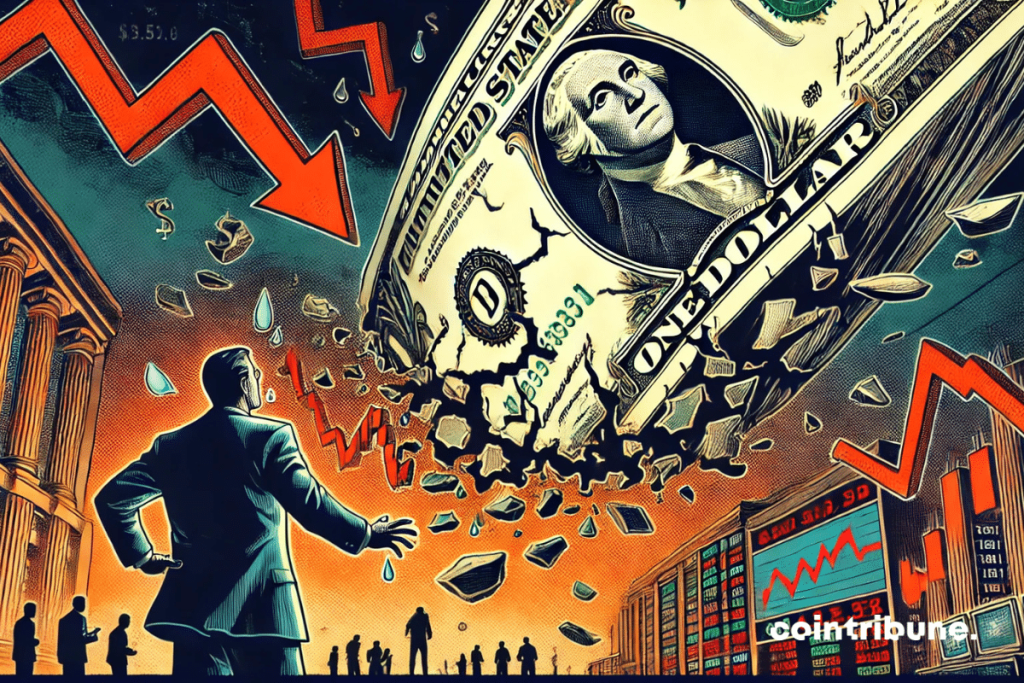
## The Decline of Dollar Dominance
The dominance of the US dollar in global trade and reserves now faces unprecedented scrutiny. Deutsche Bank has raised concerns about dedollarization among US allies, a trend spurred by geopolitical tensions and financial sanctions. Should this movement gain traction, it could significantly disrupt the global monetary balance and shift power dynamics within the international financial system.
## Historical Pillars of Dollar Dominance
Historically, the dollar’s prominence in the global financial system has been underpinned by several key advantages:
– **Stability:** Despite economic ebbs and flows, the dollar has long been perceived as a reliable safe haven.
– **Global Trade Role:** Numerous commodities, including oil, continue to trade predominantly in dollars.
– **Influence of US Financial Institutions:** The extensive power of the American banking network has cemented the dollar’s dominance.
Nonetheless, signs indicate that this hegemony is on shaky ground. The International Monetary Fund (IMF) notes a steady decline in the dollar’s share of global reserves, plunging to its lowest in decades. Meanwhile, international dollar transactions are yielding to bilateral agreements in other currencies.
## Rising Alternatives: Shaping a New Financial Order?
Rising concerns about the greenback’s reliability have sparked initiatives for a more multipolar financial system. Notably, China is actively promoting the yuan on the global stage by securing trade agreements with emerging markets. Concurrently, Russia has resorted to rubles and yuan for its raw material exports.
Elsewhere, countries in Asia and Latin America aim to sidestep the dollar by using local currencies for transactions. The commodities sector is also seeing shifts, with some oil contracts now denominated in yuan.
Could cryptocurrencies carve out a niche in this evolving landscape? Bitcoin, often viewed as an alternative store of value, stands to gain from the growing distrust in fiat currencies. Some nations are also venturing into central bank digital currencies (CBDCs) as a means to bypass the dollar.
### Factors Influencing Cryptocurrency Adoption
Several crucial factors will determine cryptocurrencies’ ascent in this new environment:
1. **Institutional Adoption**
2. **Regulation**
3. **Investor Confidence**
As dedollarization progresses, cryptocurrencies might play a pivotal role, offering a decentralized global exchange solution to rival traditional currencies. Yet, Deutsche Bank’s alert indeed shines a spotlight on a transformative trend that could redraw the international monetary system’s map. Should [dedollarization](https://www.cointribune.com/en/donald-trump-ready-to-tax-brics-to-maintain-us-dollar-dominance/) gain momentum, the world might transition towards a more fragmented framework, marked by multiple currencies vying for economic supremacy.
## US Allies and Reducing Dollar Dependency
Deutsche Bank warns that this phenomenon is gaining pace. Numerous US allies are curtailing their reliance on the [dollar](https://www.cointribune.com/en/brics-economic-strategy-at-risk-amid-dollar-boom/) for trade and reserves.
According to Deutsche Bank, escalating economic and geopolitical strains are key contributors to this dynamic. “US sanctions and monetary policy uncertainties push many countries to explore dollar alternatives,” reports the esteemed financial institution Cointribune EN(https://news.bitcoin.com/deutsche-bank-warns-of-significant-de-dollarization-risks-among-us-allies/).
Prominent players like China, Russia, and some Gulf states have already pivoted towards other currencies, particularly the yuan and euro. Recent diplomatic frictions with Washington and concerns about the dollar as a tool of diplomatic leverage are speeding up this transition. Countries are keen to stabilize their exchanges and ink deals for payments in local currencies, reducing exposure to greenback fluctuations.
## Conclusion
The warning from Deutsche Bank underscores a shift that could reshape the contours of the global monetary framework. In a scenario where the dollar no longer enjoys unchallenged dominance, financial market players and investors need to anticipate the implications of a multi-currency world.
—
**DISCLAIMER**
The views expressed in this article are those of the author and should not be considered investment advice. Conduct your own research before making any investment decisions.
