

Contents
The State of the U.S. Stock Market: An Englishman’s Perspective
In recent times, much talk has surrounded the U.S. stock market and its valuation. Some might say it’s as inflated as a soufflé. Let’s dig into the matter and see what the fuss is all about.
Observations from Jamie Dimon
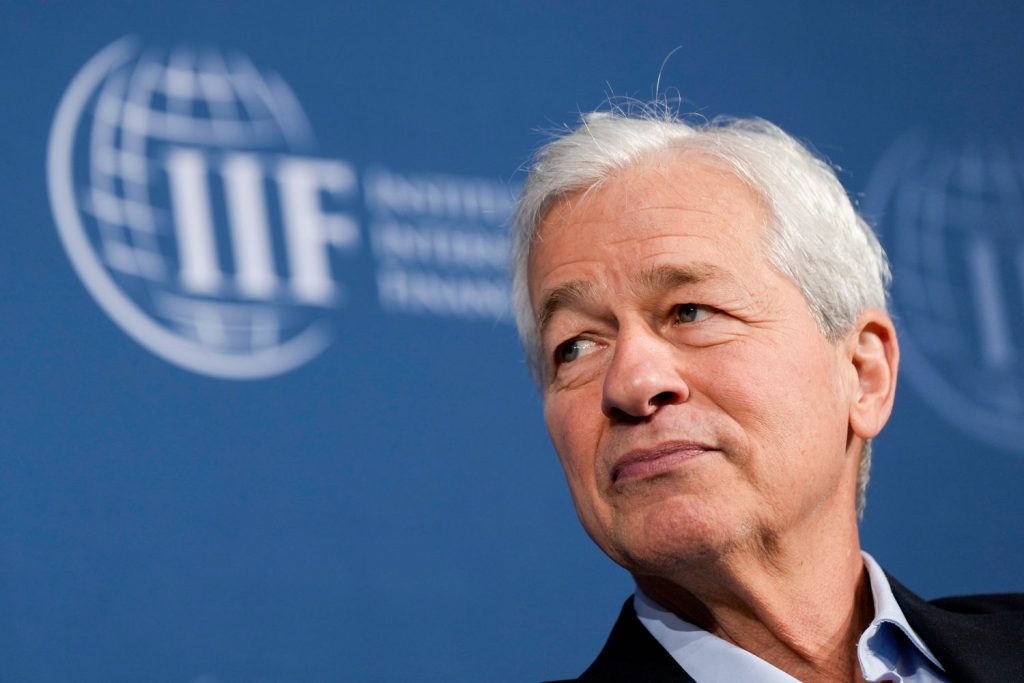
JPMorgan Chase CEO, Jamie Dimon, made a rather candid observation regarding the state of the U.S. stock market. He mentioned that asset prices were "kind of inflated" during a chat with CNBC at the World Economic Forum in Davos, Switzerland. He expressed a sentiment slightly more sceptical than his Wall Street comrades.
Why the Inflation?
Indeed, the U.S. stocks have been high-flyers, showing admirable performance over the past years. Such buoyancy has been underpinned by a robust labour market and consumer spending levels, despite elevated interest rates. Donald Trump’s deregulatory and tax-reducing antics have also played their part in maintaining this bullish sentiment amongst investors.
However, Dimon voiced his preference for a cautious outlook, highlighting lofty asset values. He noted that achieving satisfactory outcomes is crucial to justifying such elevated prices. The quest for growth, Dimon added, does offer a favourable path, though unexpected challenges can spring up like pub brawlers.
Challenges Beyond Mere Valuation
Dimon’s concerns stretch beyond market valuations. As expressed in JPMorgan’s quarterly earnings report, he highlighted the spectre of geopolitical tensions in Europe, the Middle East, and Asia. Global sovereign finances, in his view, add another layer of complexity to the current economic landscape.
Moreover, the burgeoning issue of deficit spending keeps Dimon on his toes. As he pointed out, "it’s a global issue, not just an American issue." He questioned whether inflation would take a backseat in the future, expressing some uncertainty.
The Trumpeter’s Recession-in-Heriting Burden
According to the Wall Street Journal, the stock market’s Shiller P/E ratio on the day of Trump’s second inauguration was a daunting 44% higher than at the start of Herbert Hoover’s tenure—an era shortly heralding the Stock Market Crash of 1929. This inflationary hike bestows upon President Trump the most expensive stock market legacy the U.S. has seen.
Growth: A Proffered Panacea
Dimon hinted at support for Trump’s promise to trim government expenses and scales down regulations. Growth, he argued, remains the sole viable remedy to tackle deficits, thereby controlling mounting debt levels.
A Summary
In essence, Dimon’s view retains a cautious stance on the U.S. economic outlook. Amidst an inflated stock market, geopolitical tensions, and deficit spending woes, the call for sustainable growth strategies could not be more vital. As an Englishman might muse, "steady as she goes," for even amidst promising prospects, one must tread with awareness and prudence.
